Jeanne Kosciusko-Morizet ’26
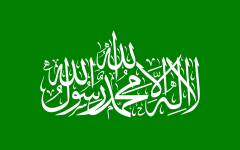
Hamas is an acronym for Harakat al-Muqawama al-Islamiya, “Islamic Resistance Movement”. The organization was founded by Sheikh Ahmed Yassin, a Palestinian cleric who became an activist in local branches of the Muslim Brotherhood, a socialist Islamist movement from Egypt. Hamas is opposed to the secular approach of the Palestine Liberation Organisation (PLO), an organization controlled by the rival party Fatah, and rejected attempts to cede any part of Palestine.1
Beginning in the late 1960s, Yassin preached and performed charitable work in the West Bank and Gaza, both of which Israel occupied following the 1967 Six-Day War. Hamas was established as the Brotherhood’s political arm in Gaza in December 1987, following the outbreak of the first intifada, a Palestinian uprising against Israeli occupation of the West Bank, Gaza, and East Jerusalem. The goal of Hamas was to confront the Palestinian Islamic Jihad (PIJ), a different group whose dedication to armed resistance against Israel presented the risk of Palestinians turning away from the Brotherhood.2
In 1988, Hamas published its charter, specifically calling for the destruction of Israel and the establishment of an Islamic society in historic Palestine. One of the quotes that opens the text, attributed to the founder of the Muslim Brotherhood Hassan el-Banna is explicit: “Israel exists and will continue to exist until Islam abrogates it as it abrogated what preceded it.”3
In the years following the publication of its charter, Hamas increased the use of violent acts to place itself in opposition to Israel. The organization first employed suicide bombings in April 1993 as a means to express opposition against the Oslo Accords, a peace treaty signed between the Palestinian Liberation Organization (PLO) and Israel. Hamas’ escalating aggression led the United States to designate Hamas as a foreign terrorist organization in 1997.4
Hamas established itself as a significant power during the 2006 elections for the Palestinian Legislative Council. Hamas won the majority of the seats on the council in a surprise victory over Fatah. Many voters perceived Fatah as delivering little to Palestinians through its negotiations with Israel. Disagreements between the two parties led to intensified clashes in the Gaza Strip. The inter-political conflict between Hamas and Fatah later split the control of Palestinian land in half: Hamas with the Gaza Strip while Fatah controlled the land-locked “West Bank” of Palestine.5
As Hamas took over the remnants of Palestinian Authority (PA) institutions in the strip, it established authoritarian legislatures. Hamas’ governance follows Sharia-based Palestinian Basic Law, as does the PA; however, it has generally been more restrictive than the law requires. The organization rigorously controlled how women dress and enforced gender segregation in public during the early years of its rule.
Hamas started to face a particularly important economic hardship in 2012, due to its strained relations with the Iranian government, its primary source of support. These tensions were caused by Hamas leaders’ public support for the Syrian opposition. Following the statements, Iran’s financial aid to Hamas— estimated to previously exceed $200 million a year— was greatly reduced.6
Still reeling from the diminished Iranian aid, the Hamas government in the Gaza Strip faced further financial difficulties in 2013. That year, an interim military government antagonistic to Hamas toppled the Muslim Brotherhood-affiliated government Mohamed Morsis. Smuggling tunnels, a central piece of Hamas infrastructure needed to facilitate tax revenue and supplies, were then closed by the Egyptian army. Commercial goods were prevented from entering Gaza through the Salah al-Din border crossing.7
The Salah al-Din border crossing was reopened in 2018, and with the gain brought by the reopening of these borders, Hamas has been able to reassert its power and step up its attacks on Israel. However, while the attack perpetrated by Hamas on October 7, 2023, might appear to be part of these ambitions, it is in all likelihood in response to a very different political agenda: the theocratic Iranian government.
Indeed, for over a year now, the Iranian regime has been facing forms of popular insurrection of admirable determination and courage. Since Hamas is largely financed by Iran, it is therefore probable that Teheran used Hamas to draw the State of Israel into a war against Gaza. The resulting Palestinian civilian casualties would then lead to demonstrations shouting “Death to Israel” rather than “Women, Life, Freedom” in Islamic countries.8
Notes:
- https://www.cfr.org/backgrounder/what-hamas#:~:text=Yassin%20established%20Hamas%20as%20the,%2C%20Gaza%2C%20and%20East%20Jerusalem) ↩︎
- https://www.britannica.com/topic/Hamas ↩︎
- https://www.liberation.fr/checknews/est-il-vrai-que-la-charte-du-hamas-fixe-comme-objectif-la-destruction-de-letat-disrael-20231014_MHHMAAN74ZGGVOIQCAWPHJYNOE/ ↩︎
- https://www.pbs.org/newshour/world/what-is-hamas-what-to-know-about-its-origins-leaders-and-funding ↩︎
- https://www.radiofrance.fr/franceculture/histoire-geographie-droit-economie-aux-origines-du-hamas-1891499 ↩︎
- https://www.pbs.org/newshour/world/what-is-hamas-what-to-know-about-its-origins-leaders-and-funding ↩︎
- https://www.pbs.org/newshour/world/what-is-hamas-what-to-know-about-its-origins-leaders-and-funding ↩︎
- https://www.lemonde.fr/idees/article/2023/11/02/ivan-segre-l-avenir-d-israel-repose-sur-une-alliance-avec-les-forces-progressistes-arabes_6197821_3232.html ↩︎



Leave a Reply