By: Takunda Basvi
A U.S.–Nigeria missile strike on Lakuwara may signal resolve, but its high civilian risk, financial cost, and neglect of poverty-driven root causes threaten to erode public trust, deepen instability, and increase Nigeria’s dependence on an unreliable foreign alliance.
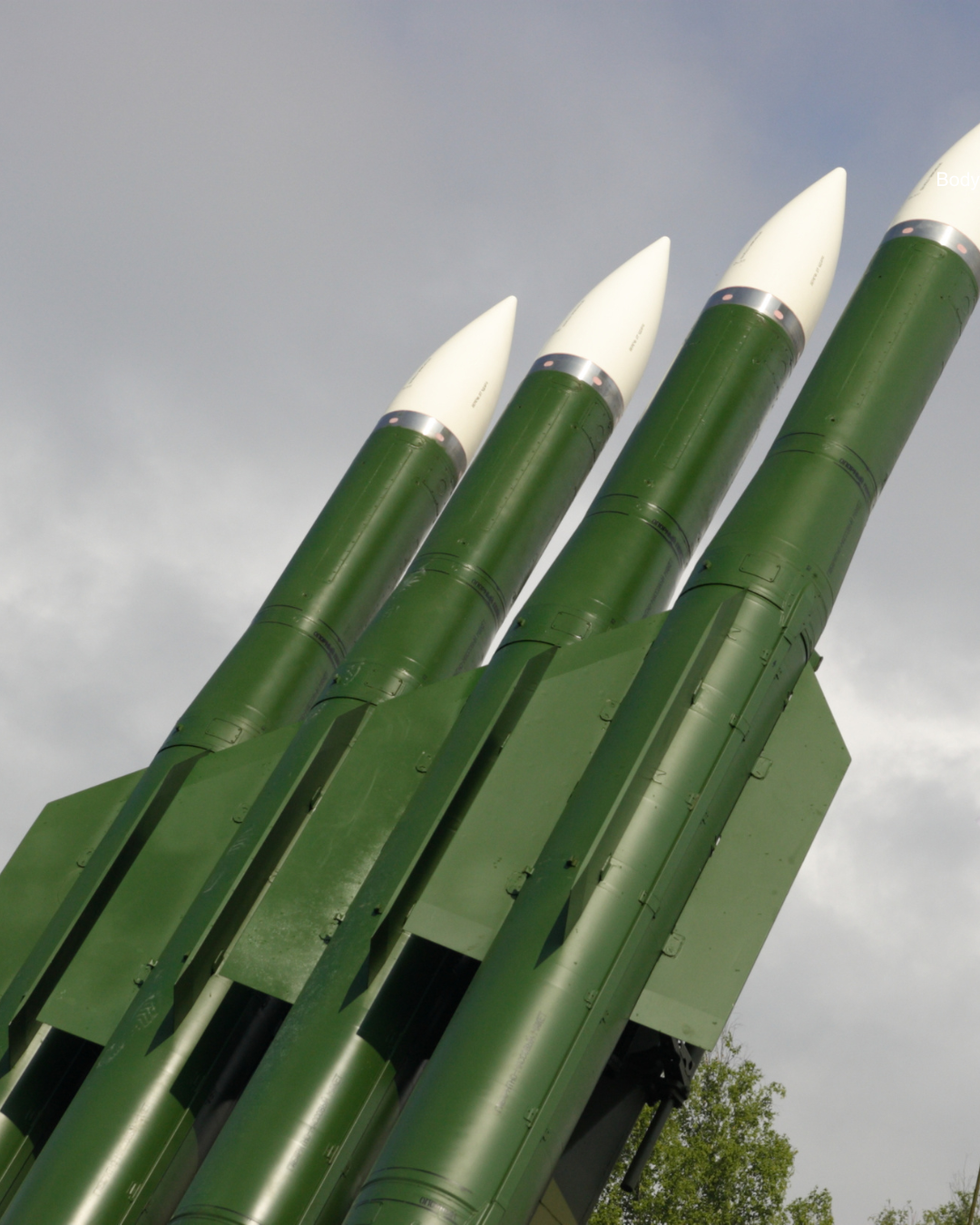
As snowflakes decorated our front patios in the Northern part of the United States, 16 missiles blasted into the Northwest region of Nigeria–targeting a range of terrorist groups. On December 25th, in a joint effort between the United States and Nigerian officials, a missile strike was launched against ISIS affiliated terrorists located in Northwest Nigeria. This group, Lakuwara, first emerged in September 2024, after a lack of security coordination between Nigeria and Niger. Joint border control with Niger was suspended after the Presidential Guard detained President Mohamed Bazoum back in July of 2023. Based in troubled regions of Nigeria, Lakuwara actively victimizes surrounding communities. After initially being pushed out of Nigeria in 2022 by the Nigerian military, Lakuwara regrouped. They have now begun controlling more militants and regions, all while planning deadly attacks. This attack was a response to the growing threat of terrorism and banditry by various groups, but more specifically the latter. However, violence will not suppress terrorism–it will erode governmental trust and deepen internal troubles, while relying on relations between Nigeria and the U.S, which might prove to not be sustainable for the foreseeable future.
The Nigerian Government’s track record of previous unintentional bombings of their own citizens is a cause of concern, severing the already beaten down trust between the government and its people. Exactly 16 tomahawk missiles were dropped onto Nigerian soil. However, four of the missiles were reported to not have detonated. The four untouched warheads respectively landed in an onion field in a nearby village, another in a residential building, an agriculture field and the fourth was recovered by Nigerian police in the forest. However, this attack was careless and inefficient. More than two decades ago, these missiles reported a 90% success rate but now boast a 25% failure rate after this attack. The missile’s failure poses a question regarding the handling of this attack and the preparation. Instead of targeting the real issue of poverty in Nigeria, the government rerouted useful money into a temporary solution.
Moreover, Nigeria has a track record of accidental bombings, in pursuit of terrorists. In 2017, 50 people were killed and 200 were injured due to a Nigerian Airforce fighter jet accidentally dropping bombs onto settlements. Most recently, in 2023, 80 were killed from another accidental bombing in Northwestern Nigeria during a religious celebration. From 2017 alone, about 300+ people have been reported to have been killed by terrorist targeted airstrikes. As hard as Nigeria is trying to fight this issue, they are tackling it from the wrong angle. This angle is sloppy and rushed, which is leading to deadly mistakes and consequences for their citizens. It also brings anxiety onto the public and onlookers alike, as to the results of these attacks and the long-term goal of this misguided violence.
Moreover, the Northwest of Nigeria is ridden with problems which must be fixed to tackle terrorist groups properly. The most costly problem lies in poverty and lack of agricultural resources. As a result of this, fights between Muslim and Christian farmers have intensified. In fact, Lakuwara’s membership consists of former herdsmen, who were hired to protect the community from banditry and violence. However, now they have turned against the community–levying taxes and committing crimes. Taking the conditions of their hometown’s into account, this is the easiest way to survive. Furthermore, Lakuwara gives incentives to join them: money, seeds and farm tools in areas that are ridden by climate change and “the loss of agriculture-based livelihoods.” With a dwindling economy and a lack of opportunities, the only thing on their minds is survival and putting food on the table, which is what Lakuwara sadly provides. On top of this, Muslim and Christian farmers’ battle for scarce resources results in massacres–which unfairly involves innocent bystanders. All while this wound festers, both US and Nigerian officials have resorted to the purchase of 2 million dollar missiles each. In total, 32 million dollars was spent on this attack, not accounting for the intelligence gathering and personnel. Even with this amount of money, four bombs did not detonate and the attack proved to be a temporary setback, killing 2,000 to 3,000 members. Spending that amount of money on a temporary and expensive solution is only a mockery of the real problem at hand.
Lastly, calling upon the United States for collaboration might not be sustainable as security-related disputes increase between Nigeria and the U.S. The collaboration between the aforementioned states was timed quite awkwardly. It comes directly after President Trump’s public condemnation of Nigeria for “failing to protect Christians from persecution.” On Twitter, he previously threatened military action against Nigeria: “If the Nigerian Government continues to allow the killing of Christians, the USA will immediately stop all aid and assistance to Nigeria and may very well go into that now disgraced country, ‘guns-a-blazing,’ to completely wipe out the Islamic Terrorists who are committing these horrible atrocities.” This threat was followed by putting Nigeria on a travel ban, limiting who can travel to the United States from Nigeria. This illustrates the attack’s haste, serving as a last-ditch effort to appeal to the US president and repair diplomatic relations for future aid. It seems as if the US President is dangling important resources as a means to control Nigeria and its officials–stripping them of their freedom of choice, especially on this issue. However, Nigerian officials are now attempting to get a hold of the narrative. Although the motive is still somewhat unclear on the US side, President Trump claims that Lakuwara is targeting Christianity in Nigeria, while Nigerian officials stress that the ISSP is targeting all types of religions and they are aiming to protect both their people and land. These disagreements show an unstable relation between both the US and Nigeria, which opposes the force and unity they are using to attack the ISSP. If internally fragmented, these attacks will not work on mitigating terrorists or helping Nigerian citizens. It will only appear as weak to not only the ISSP, but onlookers as well. From this exact situation, it can be seen that the United States will not always be available to back Nigeria up, posing the question of the events that will follow once Nigerian officials decide to disobey the U.S and solve it accordingly.
As Nigeria continues to expand and develop itself, the relationship will prove to be straining.Not only will these terrorists maintain a hold on Nigeria and its people, but the United States will too. This exhausting war against terrorism is tiring and unsustainable economically and environmentally. However, if the Nigerian government steps in and controls the narrative while pushing for internal changes, there could be a positive shift in direction. Nigeria must actively listen to its people’s cries while carefully balancing their war on terrorism. If this equilibrium is achieved, then Nigeria will weaken terroristic threats and lessen foreign dependency, leading to increased autonomy and long-term stability.


Leave a Reply